At a recent international friendly between Iran and New Zealand, the scoreline told one story, but the stands told another entirely. For those of us w...
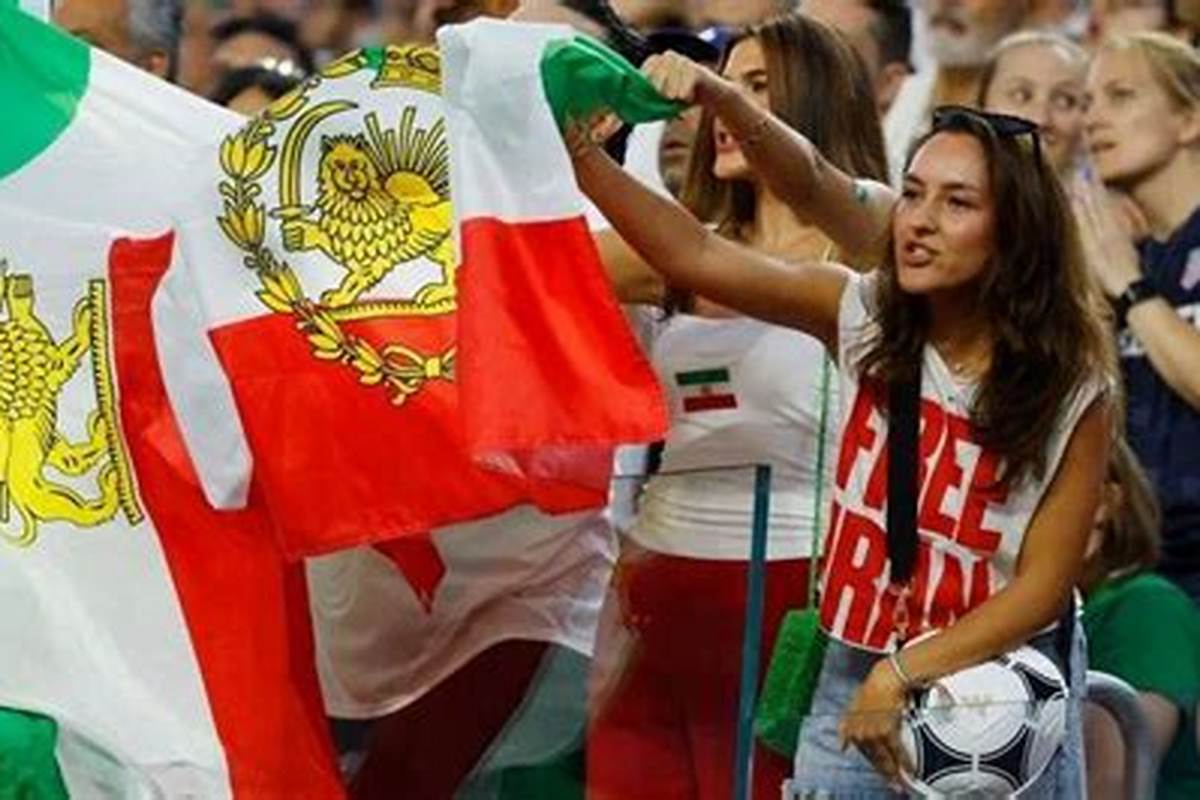
At a recent international friendly between Iran and New Zealand, the scoreline told one story, but the stands told another entirely. For those of us who have spent years watching the beautiful game, we know that football is rarely just about the 22 men on the pitch. It is a vessel for identity, for protest, and for the quiet fury of a people. This match was no exception. The Iranian team, draped in the nation's colours, may have been aiming to pull a fractured society together, to offer a moment of shared pride. Yet the reality, as observed by GoalZaza's reporters on the ground, was a splintered display of political allegiance that no low block or moment of clinical finishing could mask.What unfolded in the stands was a microcosm of the wider schism. You had pockets of fans waving the official flag, the emblem of the Islamic Republic. But then, in stark contrast, there were other sections of the crowd raising the Lion and Sun, a pre. revolutionary symbol that carries immense political weight for the diaspora and many inside the country. This is not just about a preference for a bit of ancient heraldry. It is a visceral, emotional stand. You cannot park the bus on these kinds of divides. They spill over the barriers and onto the terraces, turning every chant, every banner, into a statement of defiance or loyalty.The players, caught in the middle of this transitional play between politics and passion, have an almost impossible task. How do you unify a nation when the very national anthem is a matter of bitter dispute Some Iranian fans have chosen to stay silent during the anthem, a gesture of protest that has become as common as a goalkeeper's goal kick. Others roar it out. It creates a strange, jarring atmosphere, one where the beautiful rhythm of the game is constantly interrupted by the ugly thud of real world grievance. This is not squeaky bum time for a title race; this is something far more profound, a battle for the soul of a nation being fought out in a football stadium.Let us be clear. For the Iranian football authorities, the goal is control and a show of unity. For a significant portion of the fanbase, the goal is visibility and dissent. It is a raw, uncompromising fixture of ideology. And as the New Zealand side, likely bemused by the charged atmosphere, went about their business, the real drama was happening in the stands. It served as a stark reminder that while we often obsess over tactical flexibility and formations, the true narrative of a match can be written by a flag, a chant, or a deliberate silence. This was Iran versus Iran, and the score was still very much in dispute long after the final whistle had blown.